Tuesday, April 18, 2017

Curriculum Change: Difficult but Necessary

In the National Association of Independent Schools newsletter, Jorgenson (2006) discusses why curriculum change is necessary for today’s independent and private schools. The children we are receiving as students today in private schools are much more complex and diverse in ability and development. Students today can present complex learning challenges like ADHD, Autism, Dyslexia, family life issues. In addition, Jorgenson (2006) points out that independent and private schools have been less likely to follow prescribed curricula, lesson plans, and certifications in favor of academic freedom. However, Christian schools need to invest the time and resources to develop curriculum guides, plans, and detailed units in order to better identify instruction gaps or redundancies. Implementing this type of change focused on improved instruction for greater student achievement may also serve to motivate faculty to further evaluate what they are doing in the classroom and whether they are using effective planning and instructional strategies. Do you think that Christian schools have also been less assertive in establishing professional learning communities and is this a tool that could aid schools in the area of student diversity?

Read the article:


Reference:
Jorgenson, O. (2006). Independent School Magazine. Retrieved April 18, 2017, from http://www.nais.org/Magazines-Newsletters/ISMagazine/Pages/Why-Curriculum-Change-Is-Difficult-and-Necessary.aspx

The Impact of Arts Education

A recent article stated that adults who attend a musical performance or play an instrument were more likely to have participated in music education in school. The survey sponsored by the National Endowment for the Arts pointed out that playing an instrument and singing were highly influenced by the study of music in school. These results held true in the theatrical arts and visual arts as well. There appears to be a direct correlation between arts education in school and playing an instrument. An interesting point made in the article was that socioeconomic status did not serve as an indicator for appreciating the arts or playing an instrument. Since there is an apparent correlation between arts education and continued appreciation of the arts, should schools invest even more resources in fine arts programs?

Read the article:

Reference:
Zubrzycki, J. (2017, April 11). Study: Music education in K-12 promotes lifelong engagement with arts. Retrieved April 18, 2017, from http://blogs.edweek.org/edweek/curriculum/2017/04/arts_education_research.html?_ga=1.260307076.843945533.1492478581

Computer Science Education for All

Education Week recently posted an article that seven states have created standards for computer science education in the K-12 environment with another eight states developing them. According to the article, the federal government under President Obama initiated a $4 billion initiative to develop computer science programs to meet the need of educating students in this essential skill. The goal is to develop a comprehensive computer science program and have these states share them as best practices with other states. This program will also focus on diversity and ensure that socioeconomic factors and gender will not effect access to technology.  In addition to learning how to use technology, students will learn how to properly discuss issues online and how to protect their privacy.

Read the article:

References:
Zubrzycki, J. (2017, April 06). States all over the map on setting computer science policy. Retrieved April 18, 2017, from http://blogs.edweek.org/edweek/curriculum/2017/04/computer_science_state_policy.html

Saturday, April 15, 2017

Technology to Avoid

Meris Stansbury in eSchool News, points out five technologies that should be avoided in the classroom and what should be used instead. This is very important as many times consultants and other educators will quickly recommend allowing students to use their cell phones or go to various websites during school activities. When dealing with young people, it is important to make sure that we are giving them meaningful technology experiences and not giving them easy access to tools that could prove troublesome. We must be vigilante and make sure that the tools we are encouraging represent true academic work in a way that brings glory to the Lord.

Five technologies to avoid:
1. Social Media applications should be avoided and replaced with educational forums and discussion boards
2. Games should be avoided and technology like virtual reality used instead
3. Untrusted apps and online tools avoided and those that have been proven effective used instead
4. Anything that is not accessible should be avoided and IT consulted before trying to use it
5. Device specific technology should be avoided for those that are available on all platforms

Read the article:
http://www.eschoolnews.com/2017/04/07/technologies-avoid-classroom/

References:
Stansbury, M. (2017, March 27). 5 technologies to avoid in the classroom-and what to use instead. Retrieved April 15, 2017, from http://www.eschoolnews.com/2017/04/07/technologies-avoid-classroom/

Changing the Traditional Classroom

In an article in eSchool News, Peter Weist compares the development in education to that of the development of the automobile. He points to the fact that a Model T served the purpose of transport, but improvements made the experience better for drivers. He compares education to this stating that the traditional classroom based mostly on direct instruction has and does work, but advances and technology can improve the performance of students dramatically. Many educators are resistant to change in education, but Weist points out that in order to advance education then they must embrace change. I believe that we must balance this keeping what is beneficial from the past and embracing what is new but proven to work. The main thing we need to do in Christian education is make sure that we evaluate all new ideas, theories, practices, and technology through a biblical lens before accepting and implementing it.

Read the article:
http://www.eschoolnews.com/2017/02/23/classroom-works-change/

References:
Weist, P. (2017, February 22). The traditional classroom works so why change it? Retrieved April 15, 2017, from http://www.eschoolnews.com/2017/02/23/classroom-works-change/

Friday, April 14, 2017

Increasing the Demands for a High School Diploma

An effort is underway to make any Chicago Public School student graduating in 2020 and after have a plan for their time after graduation in order to receive an diploma. According to the article, the student would be required to present proof of college admissions, military enrollment, job placement, apprenticeship, and the like. The teachers' unions are speaking out against the requirement stating that it will require more of counselors as there are no plans to high additional counselors. What do you think about an item like this as a requirement for a diploma?

Read the article:
https://www.bloomberg.com/news/articles/2017-04-06/no-post-high-school-plans-chicago-doesn-t-think-you-should-graduate

References:
Mosendz, P. (2017, April 06). No post-high school plans? Chicago doesn't think you should graduate. Retrieved April 15, 2017, from https://www.bloomberg.com/news/articles/2017-04-06/no-post-high-school-plans-chicago-doesn-t-think-you-should-graduate

Place Value Help

My sister-in-law posted a link to this video, and I thought it might be helpful to those responsible for teaching place value. This can be a topic that some students really struggle with, especially when dealing with expanded form, expanded form with exponents, word form, and standard form. This video shows an interesting way to help students with place value using Styrofoam cups. Students may find this interesting and easier to understand.

Link to Video:
https://www.facebook.com/WeAreTeachers/videos/10155218828213708/

References:
WeAreTeachers. (n.d.). Retrieved April 14, 2017, from https://www.facebook.com/WeAreTeachers/videos/10155218828213708/

Students Controlling Their Own Education?

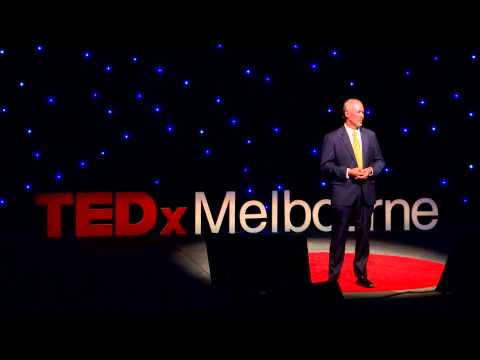
In this video at a TED convention in Australia, Peter Hutton (2014) describes perceived problems with high school curriculum and instruct...